
Knowledge Hub

CBRE’s latest Asia Pacific Leasing Market Sentiment Index reveals that overall leasing sentiment improved in Q1 2025, driven by a rise in office and retail demand:

  • Office – Sentiment improves in multiple marketsModerate increase in enquiries and site inspections across most markets, partly due to seasonal factors. While regional leasing activity continued to be dominated by renewal vs. relocation decisions, expansionary appetite for office space increased in India and Japan.
  • Retail – Expansionary demand continuesPrime space in core locations underpinned improved leasing sentiment. However, rents in most markets were largely unchanged as retailers adopted a more cautious attitude towards real estate planning. 
  • Industrial & Logistics – Tenant market persistsThe overall market remains predominantly in favour of tenants amid slower leasing activity in mainland China and Hong Kong SAR. However, the period witnessed a moderate increase in site enquiries as selected occupiers sought cost-saving options for consolidation and downsizing.
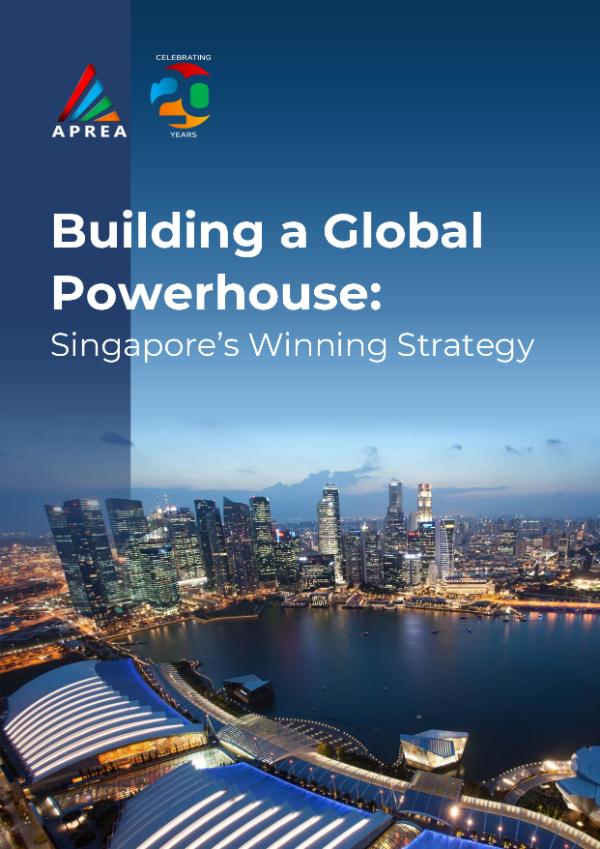

Singapore is strengthening its position as a global capital market by leveraging its strategic location, regulatory incentives, and focus on emerging asset classes such as REITs, data centers, and logistics.

With the Monetary Authority of Singapore’s recent SGD 5 billion investment program and streamlined listing regulations, the city-state is enhancing liquidity and attracting more regional and international players. As de-globalization and geopolitical tensions shift capital flows, Singapore’s emphasis on innovation and diversification ensures its continued relevance in the global economy.

Asia Pacific’s growing influence on global capital markets is reshaping investment dynamics, positioning it as a prime source and a top destination for global cross-border capital. With stabilising economic fundamentals and sustained investment momentum, the region continues to strengthen its appeal among investors seeking growth and stability.

Key highlights of the report include:

Asia Pacific

  • APAC is home to four out the top 10 capital sources worldwide – Singapore, Hong Kong, Japan and China.
  • Seven of the top 10 destinations for land and development sites globally located within Asia Pacific – China, Singapore, Australia, India, Malaysia, Vietnam and Japan.
  • For standing assets globally, Asia Pacific remains a key player with Japan, Australia and China ranking among the top 10 destinations.
  • The region has diverse investment appeal: Six sectors, led by office and industrial, saw US$183 billion in investment over the past 24 months.
  • The office sector led the way with US $57billion, followed by industrial (US $55billion), retail (US $37billion), multifamily (US $17billion) and hospitality (US $15billion).
  • Key source of global capital: Asia Pacific is home to four of the top 10 sources of capital – Singapore Hong Kong, Japan and China.
  • Continued dominance as a global cross-border capital destination: With seven out of the top 10 destinations for land and development sites and three of the top 10 destinations for standing assets, the region is a magnet for cross-border capital.

Global

  • Investment volumes increased in the final quarter of last year due to global interest rate cuts.
  • Industrial is back to being the leading global sector of choice.
  • Hospitality is the fastest-growing preferred asset class for global cross-border investors.

Despite near-term economic and geopolitical uncertainty, Asia Pacific’s economy continues to adapt to fluctuating conditions, including easing inflation and modest interest rate cuts in response to the U.S. Federal Reserve’s cuts in 2024. Foreign exchange sensitivities continue to play a role in fit out costs. Interest rates, which have shown a modest decline in in U.S. dollar terms, have risen by 5% on average in local currencies throughout APAC. Regional office demand is expected to remain stable, though supply will likely exceed demand and push vacancy rates upwards. 

Please find below the rebalancing results (effective 24 March 2025 start of trading) for the:

  • GPR/APREA Investable 100 Index
  • GPR/APREA Investable REIT 100 Index
  • GPR/APREA Composite Index
  • GPR/APREA Composite REIT Index (indicated with an asterisk)

GPR/APREA Investable 100 Index

INCLUSIONS

CHNGuangzhou R&F Properties Company Limited
MYSMah Sing Group Bhd
TWNAdvancetek Enterprise Co Ltd


EXCLUSIONS

CHNSino-Ocean Group Holding Ltd.
JPNMitsubishi Estate Logistics REIT Investment Corporation
HKGWharf Holdings

GPR/APREA Investable REIT 100 Index

INCLUSIONS

AUSDexus Industria REIT
JPNMarimo Regional Revitalization REIT Inc
PHLAREIT Inc
SGPParagon REIT


EXCLUSIONS

AUSAbacus Storage King
INDEmbassy Office Parks REIT
NZLKiwi Property Group Ltd
SGPAIMS APAC REIT

GPR/APREA Composite Index

INCLUSIONS

AUSEureka Group Holdings Ltd

EXCLUSIONS
None

Rapid growth in the Asia-Pacific data center market due to cloud adoption, 5G, and increased digital demand. It boasts 12.2 GW operational capacity and 14.4 GW under development, with China, Japan, Australia, and India leading. Key trends include hyperscale providers and sustainability efforts, while private equity continues to show interest. Emerging markets like Delhi and Taipei are also growing.

The Asia Pacific data centre market is experiencing rapid growth, driven by increasing digitalisation, AI adoption, and expanding cloud infrastructure. Investment opportunities are abundant, with mature markets such as Japan and South Korea offering stability, while emerging markets such as India and Southeast Asia present high-growth potential.

Regulatory considerations, sustainability mandates, and power availability remain key factors for investors looking to capitalise on this evolving asset class. Strategic partnerships and diversified market exposure are essential for navigating risks and maximising returns in this expanding sector.

Rebound in tourist arrivals sparks investor interest in hotel assets amid limited supply in the region. Tokyo leads as the top city for hotel investment, followed by Sydney, with Seoul and Bangkok tied for third, and Singapore and Osaka both in fifth place.

Logistics rents in the Asia-Pacific region saw a modest 0.2% year-on-year increase in H2 2024, with Melbourne experiencing the strongest growth at 6.7%, while Beijing and Shanghai faced declines due to oversupply. Vacancy rates are expected to remain stable in 2025.

A comprehensive analysis of office market performance across key cities, including Singapore, Hong Kong, Tokyo, Sydney, and Mumbai. Despite macroeconomic uncertainties, occupiers are adapting to evolving workplace dynamics. It provides comprehensive data on rental trends, vacancy rates, and emerging market opportunities, offering valuable perspectives for investors and occupiers alike.