Asia Pacific Real Estate Chief Sustainability Officer Survey (CBRE)
CBRE Asia Pacific Research and the U.S. Green Building Council have jointly launched the Asia Pacific Real Estate Chief Sustainability Officer Survey, which provides insights from landlords and investors across the region on how they are addressing the ESG imperative, the role of the CSO in achieving their goals, and their companies’ level of preparedness in achieving net zero, as well as any obstacles that are hindering progress.Key findings include:
Having a CSO or Head of ESG is seen as essential: More than 80% of sampled landlords and investors have established designated roles for such functions in Asia Pacific.
Asset owners’ net zero target is 20 years later than occupiers: About half of the surveyed asset owners cited 2050 as their target to achieve net zero. However, a separate CBRE ESG survey finds that many multinational occupiers are aiming to reach net zero by 2030.
Adoption of green-certified buildings is accelerating: Asset owners will increase the number of green buildings in their portfolios in the coming three years, although availability of green office space lags market demand.
Asset owners have widely adopted green finance: 75% of surveyed asset owners have adopted green financing for capital-heavy construction and acquisition of green buildings, with Sustainability-Linked Bonds also proliferating.
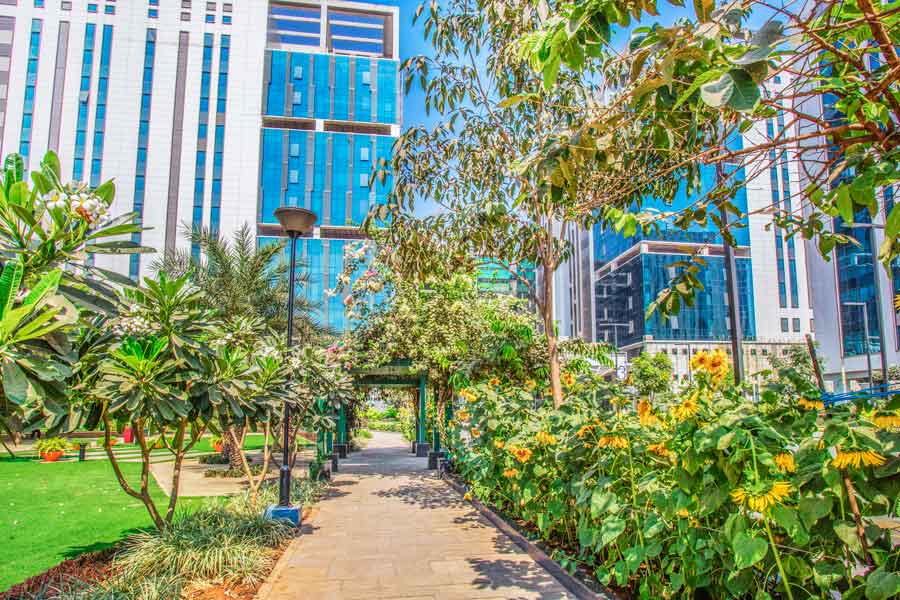
In today’s dynamic business landscape, where environmental concerns are at the forefront of global discussions, the Indian real estate sector has embraced a transformative shift towards sustainability. One of the pioneering Indian sectors – real estate is revolutionizing the industry through Grade A ecosystems of green office spaces while contributing to a thriving economy. India is currently ranked third in the world with more than 752 LEED-certified properties after China in Canada, basis USGBC Annual list.
A holistic, sustainability-driven, Grade A ecosystem is fostering business growth across India, through several initiatives:
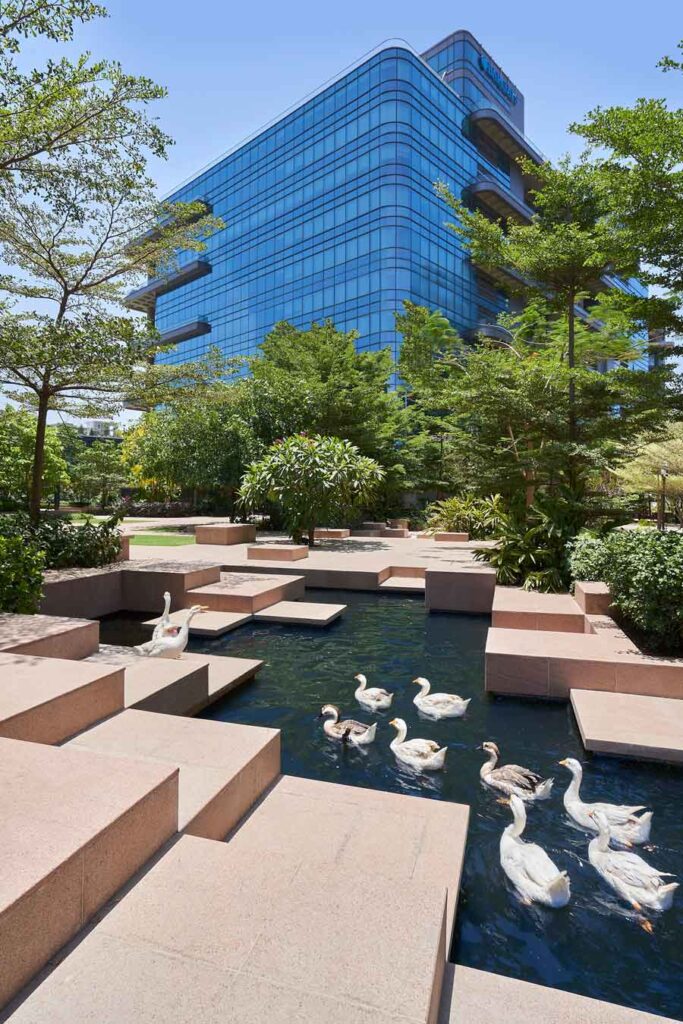
Setting Industry Standards for Green Office Ecosystems The real estate industry’s shift towards sustainability is marked by a growing preference for green office spaces that seamlessly blend eco-consciousness with industry-relevant standards. These spaces are designed with a deep consideration for energy efficiency, resource conservation, and reduced carbon footprint. By incorporating advanced technologies and innovative architectural designs, green office spaces not only promote a healthier environment but also set a new benchmark for industry standards, inspiring others to follow suit in creating sustainable workspaces.
Sustainable Practices at the Core Getting these green standards in place requires collaboration. Real estate professionals, architects, environmental experts, and regulators need to join forces. They will need to establish clear metrics for energy usage, water management, indoor air quality, and all-around sustainability. Certifications offered by esteemed organizations like LEED & IGBC add weight, serving as a seal of approval for genuine green credentials. As the demand for sustainable workplaces surges, these green office space standards are pivotal. Those who construct and use these spaces are shaping a cleaner and greener future.
Preferred Choice for Organizations and Employees Grade A green office spaces’ success transcends mere adherence to environmental benchmarks; they have evolved into the favoured choice for both organizations and employees. In today’s professional landscape, there is profound esteem for spaces that harmonize with sustainability-oriented principles. Consequently, employee preferences for eco-conscious work environments influence organizational decisions significantly. Abundant greenery, natural illumination, and fresh air collectively exert a positive influence on the overall work milieu, fostering heightened creativity, engagement, and job satisfaction.
Fostering Business Growth These practices have not only resulted in positive environmental impact but also spurred humungous business growth and aided economic growth. The adoption of sustainable practices has led to the creation of jobs in various sectors, ranging from renewable energy installation to eco-friendly construction materials.
The influx of businesses into these spaces has led to increased foot traffic in areas within these ecosystems, benefiting local businesses such as cafes, restaurants, and retail stores around. The growth of these businesses, in turn, generates employment opportunities and contributes to the overall economic vitality of the region.
In conclusion On the path to sustainability, the Grade A ecosystems within green office spaces adeptly strike a harmonious equilibrium between modern infrastructure and ecological accountability. However, the influence of these spaces extends beyond environmental preservation. Responsible businesses prioritize eco-friendly and healthy workspaces that align with their values, ensuring sustainable growth in demand for these thoughtfully designed environments.
Business as Mutual: A Blueprint for a Sustainable, Future-Fit Business
During the past years, businesses have experienced a series of once-in-a-generation challenges, forcing them to re-evaluate how they operate. From COVID-19 to geopolitical instabilities, these challenges have shown that individual events, activities and decisions all have impacts that cascade throughout a value chain, potentially with global consequences.
The challenges posted by COVID-19 have underscored the true meaning and importance of ‘Business as Mutual’. No man is an island, and no business can act independently. We need to work together in order to thrive. One thing is clear: moving forward, business as usual is obsolete. We must transition to Business as Mutual.
What is Business as Mutual?
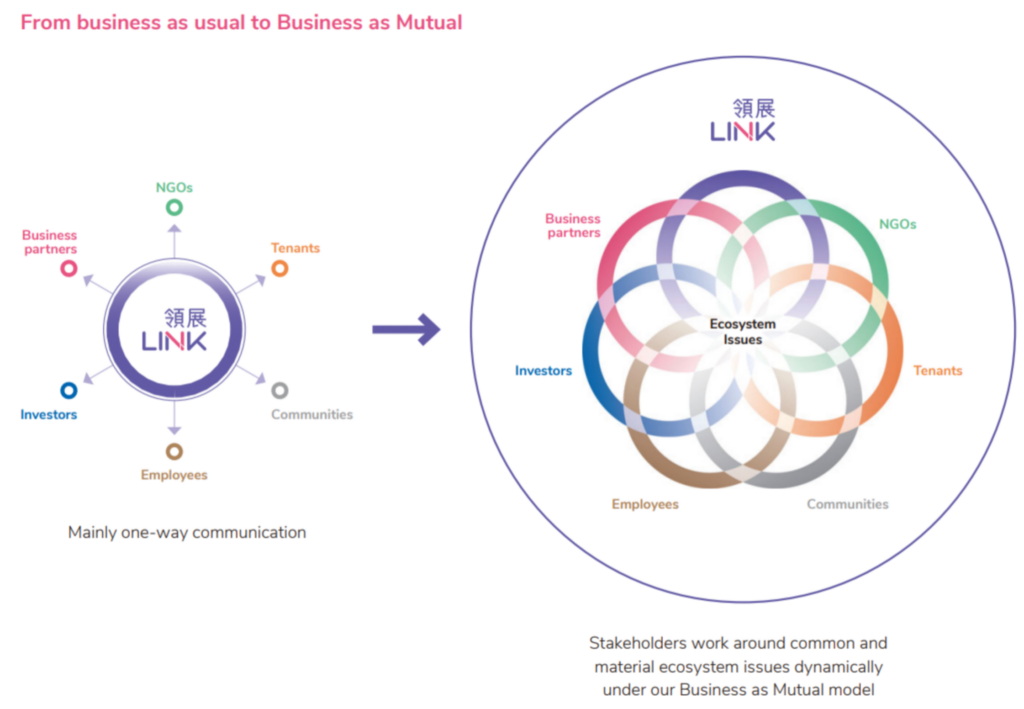
Business as Mutual (BAM) is Link’s future-fit leadership mindset and management tool designed to achieve long-term business sustainability through dynamic engagement with stakeholders.
BAM positions Link and other stakeholders as an ecosystem, in which all stakeholders coordinate and align efforts to address common material issues instead of Link-centric topics alone.
This approach is critical to maximise value creation and build a resilient ecosystem where our business, stakeholders and the community can work together on common and material ecosystem issues collaboratively.
Not only is this good for Link but it also contributes to creating ecosystem-wide shared value for all stakeholders, such as better economic performance, environmental resilience and social inclusion.
We apply the BAM approach throughout our business, including our approach to sustainability. For any project we execute or ecosystem issue we try to address, we actively engage with and collaborate with our stakeholders to inform and evolve our thinking and decisions.
Integrating BAM at Link
Over the years, we have implemented BAM in multiple areas of our business to help our stakeholder ecosystem flourish. Below are just a few examples:
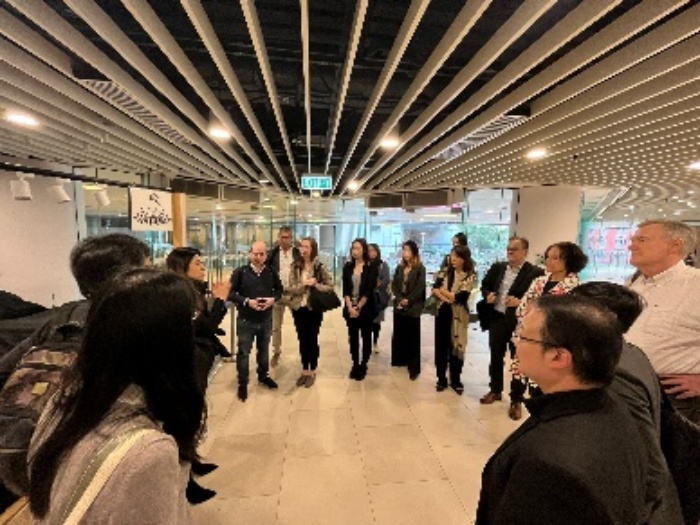
CONNECTION: an annual ESG stakeholder engagement event to share challenges and solutionsStakeholder engagement workshops for our new community mall at Anderson Road QuarryFood Angel’s We Link We Share Programme sponsored as a project under Link Together Initiative
What’s Next?
As risks and opportunities emerge in a “new normal” environment and broader societal expectations shift, we believe BAM will become more essential than ever in helping our stakeholders and partners achieve long-term ecosystem sustainability.
Going forward, Link will continue to evolve the BAM approach, from strengthening internal governance for BAM to developing a range of tools, metrics and methodologies to accelerate the transformation.
Dr Calvin Lee Kwan
Managing Director – Sustainability and Risk Governance Link Asset Management Limited
Picture this – despite around 43% of the installed power capacity of India being renewable, coal-based thermal power still contributes to almost 75% of its power generation. However, the country is making rapid strides towards achieving its ambitious goal of meeting 50% of its energy requirements from renewable energy by 2030.
The policy push has been strong, taking cues from which prominent real estate developers have begun to take meaningful steps towards attaining their ESG goals. Renewable energy, more often than not, is the first step towards achieving ESG compliance.
Through CBRE India’s first report on renewable energy, we have tried to answer the below questions and more:
What is the current state of renewable energy across India?
What are the policy measures that central and state governments are providing to boost the adoption of renewable energy in the country?
What are the common challenges that corporate occupiers face in adopting renewable energy and how can they overcome them?
What are the different renewable energy options available to corporates and how can they access those?
How are leading office developers in India aligned with sustainable power?
How can corporates achieve their renewable energy goals?
Sustainability and Climate Trends to Watch for 2024 (MSCI)
It has become clear over the last decade that environmental, social and governance risks are financial risks. What does that look like for the year ahead? The 2024 edition of MSCI’s Sustainability and Climate Trends to Watch (formerly ESG and Climate Trends to Watch) brings together the key questions that our global research team are asking, and offers thoughtful analyses and useful insights to help assess and navigate the investment landscape that lies ahead.
Climate risk has rapidly emerged as a critical consideration for real estate investors, owners and occupiers.
Managing climate risk starts with pinpointing climate-related hazards, reporting these risks, and finally embedding climate risk management into your organizational processes.
This guide is a companion to help you better identify and mitigate physical climate risks. It may seem like a big task, but we help outline simple steps.
As the world continues to transition, companies are asking themselves how they can contribute, lower the effects of climate change, and bring meaningful value into the lives and communities in which they operate. Here at KIC we build and manage logistics centers, and we ask ourselves those questions during our entire process. From finding the correct building site, to the construction of the logistics center, all the way down to finding the best tenants and managing the property. Here is how energy generation and energy management are being used in our facilities to help bring about a low carbon future.
Energy Generation (PPA Application)
Construction and retrofitting buildings with more energy efficient features is becoming a common practice and an important factor to tenants. Logistics facilities can be power hungry structures especially those with cold storage and large rooftops. Therefore, it is important for builders and management companies to continue to apply new energy technology.
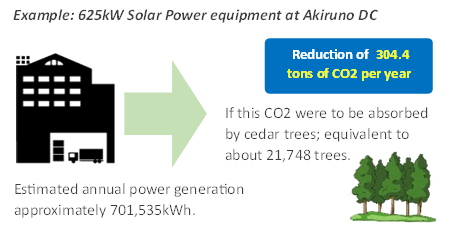
Solar energy and power purchase agreements (PPA) are perfect examples of how a logistics facility can implement new energy technology to help lower its carbon dioxide emissions. With a power purchase agreement (PPA), a third party installs a solar power generation system on the roof of the logistics building and supplies the generated electricity to the tenants. This allows the tenants to use green energy, lowers their electricity rates compared to conventional electricity and provides them with power even in the event of a disaster.
Energy Management
In addition to energy generation technology, energy management is also a very important factor in lowering electricity consumption and the overall carbon footprint of the facility. Energy management increases efficiency and limits the waste of power. For example, saving energy by switching to LED lights. LEDs consume less power and have a longer life span. The power consumption of LED is about 20% of incandescent bulbs, 30% of fluorescent bulbs and 25% of mercury lamps. It significantly reduces the electricity bill and lasts about 10 years. As a result, fewer electric lights are thrown away and labor cost of switching light bulbs is reduced.
Conclusion
Overall, energy generation and energy management are important to tenants and investors. Simple solutions such as switching to LED lights are available as well as more complicated ones such as solar power rooftops and large capacity rechargeable batteries. As we continue forward, it is important to keep in mind that green energy solutions are already making their way into logistics real estate.
The Business Case of Embracing ESG – A CDL Case Study
2023 is set to be the hottest year since records began in the mid-1800s. The Swiss Re Institute further warns that without climate action, the world economy could shrink by 18% in the next 30 years. Asian economies are particularly vulnerable – with China at risk of losing almost 24% of its GDP under the most severe climate scenario. In contrast, these figures can lessen and be as low as 4% if the 2015 Paris Agreement targets are met.
The cost of inaction is greater than the cost of action. With societal demands for ethical and responsible business practice intensifying, consumers, investors, and employees are increasingly scrutinising companies’ ESG (environmental, social and governance) performance, favouring those that prioritise environmental stewardship, social responsibility, and sound governance.
City Developments Limited (CDL)’s ESG strategy and firm commitment to “Conserving as We Construct”, established in 1995, has positioned the company well in the transition towards sustainable business operations. Its value creation business model anchored on four key pillars — Integration, Innovation, Investment, and Impact – provides the company with a solid foundation to mitigate and adapt to unprecedented threats and challenges. With long-standing board and leadership commitment and stakeholders’ support, CDL has remained effective in achieving three deliverables: “Decarbonisation”, “Digitalisation and Innovation” and “Disclosure and Communication”.
Integrating Sustainability into a Company’s Governance Structure, Strategy and Operations
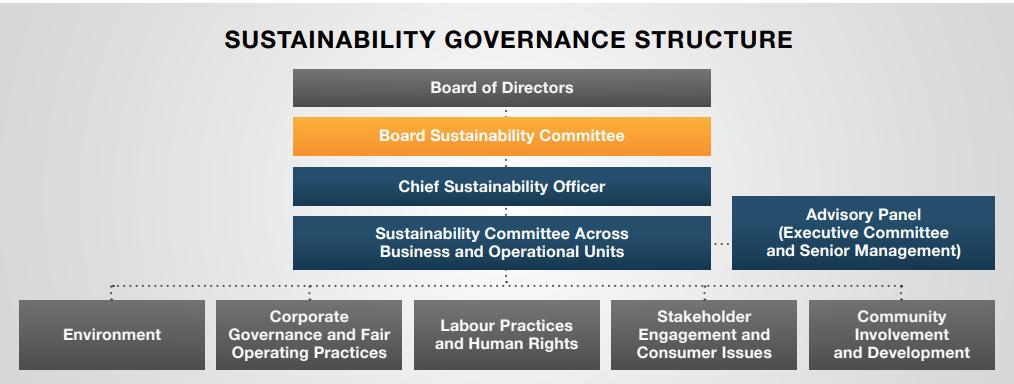
In 2012, CDL established a dedicated Corporate Social Responsibility (CSR) and Corporate Governance comprising independent directors, to provide strategic direction and oversight of its ESG activities. In 2016, the committee was renamed Board Sustainability Committee. The committee ensures that ESG considerations are embedded within CDL’s corporate strategy and decision-making processes.
CDL’s integrated sustainability governance structure that extends both horizontally between the ESG pillars and functions and vertically across hierarchical levels up to the Group CEO and the Board
Effective corporate governance includes putting in place essential policies and guidelines across the organisation. To enhance transparency, CDL’s corporate policies and guidelines are publicly available on its corporate website, sustainability microsite and staff intranet.
Innovation and Investment: Harnessing Green Technologies and Sustainable Financing
Climate and social risks are business and investment risks. As demand for green financing grows, companies with strong ESG performance will gain better access to fast-growing ESG investment funds. In 2022, CDL established its Sustainable Investment Principles to govern ESG factors in investment decisions, aligning CDL’s investments with its commitment towards a low-carbon future.
Building a green and low-carbon future is not possible without smart and innovative solutions. In 2020, CDL set up Green Building, Decarbonisation and Safety team to play a pivotal role in driving innovation and investment. The team identifies and implements cutting-edge technologies and solutions to reduce CDL’s carbon footprint in construction, operations, and asset management.
Impact: Setting targets, tracking, and disclosing ESG performance
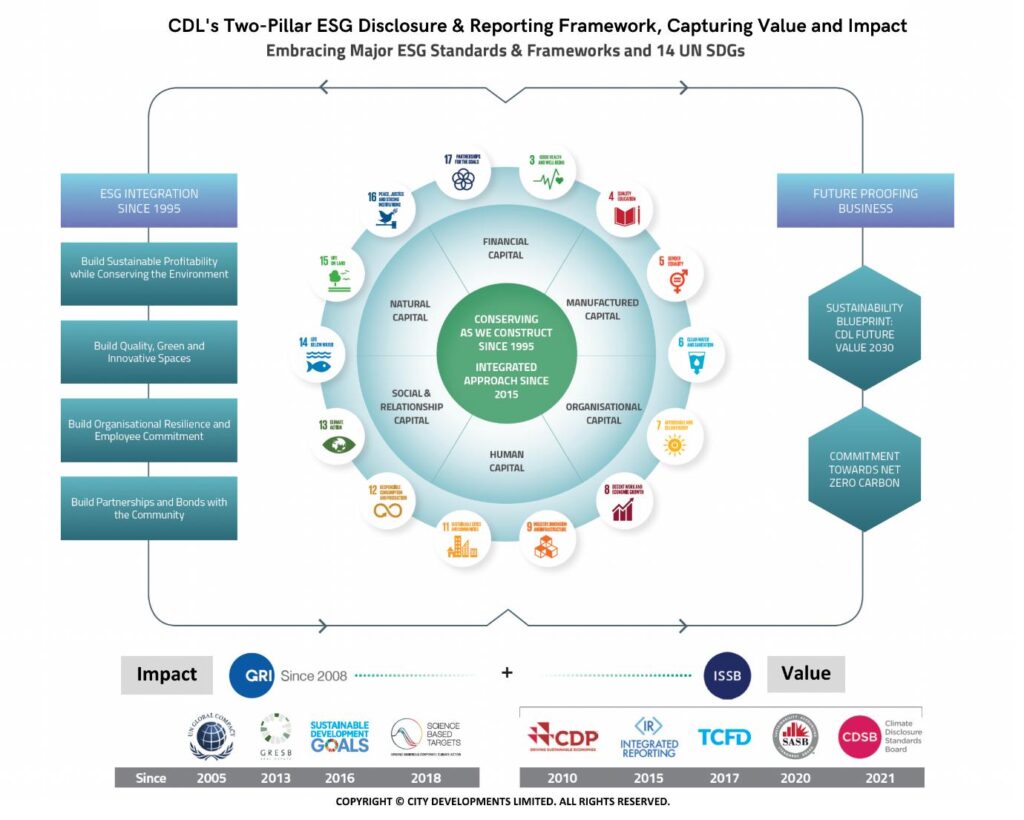
Companies can only manage what they measure. As the first Singapore company to publish a dedicated sustainability report since 2008, CDL has benefitted from the hands-on experience of producing 16 sustainability reports to-date. Using a unique blended reporting model harmonising key and relevant international reporting frameworks, standards, and approaches with the GRI Standards at its core, CDL has been able to identify material issues, set targets, track performance, and improve deliverables. This has enabled its management to take strategic and prompt action to improve, generate positive impacts and future-proof its business.
CDL’s Value Creation Model, a unique blended two-pillar sustainability reporting framework that harmonises nine key ESG reporting standards and 14 UN Sustainable Development Goals
Looking ahead, the global race to zero will continue to exert pressure on countries and companies to accelerate climate action. Sustainability-related risks and opportunities will likely increase as social, political, and cultural attitudes continue to evolve. The integration of ESG into a company’s corporate strategy is thus critical for sustained value creation.
Hiking Sustainability via Walkable Cities (Cushman & Wakefield)
The urban area and its associated design, planning, development and operation, plays and will continue to play a big role in bringing transformational change to address the changing way we live as well as our changing climate. To bring about beneficial living and urban environmental sustainability change that results in sustainable urban environs, in this report we will look at the following topics:
A Change for the Good
The 15-Minute City
Urban Public Space
Transit-Orientated Development
Ecological Solutions
Net-Zero Buildings
Key Takeaways
To hike sustainability and bring about beneficial urban environmental sustainability change that results in walkable sustainable urban environs, one concept cities in Asia Pacific can look to adopt and implement is the ‘15-minute city’ concept.
The 15-minute city is a fresh concept that promotes both urban environmental sustainability and urban livability.
When specifically considering urban public space in the Asia Pacific region in relation to sustainable 15-minute city urban environs, the aim for local governments is to generate all-inclusive citizen-friendly settings that are also economically workable.
To interconnect sustainable 15-minute urban environs, it is essential for cities in general, including those in Asia Pacific, to have a well-planned and efficient overall public transport system that is easily accessible, is convenient and cuts both journey times and air pollution levels for all their citizens.
The 15-minute city concept also places much emphasis on the need for greater food production via urban agriculture.
Finally, in order to reduce the amount of energy used by, and carbon emissions from, buildings in the Asia Pacific region, including buildings in walkable 15-minute city precincts, it will additionally be important to take the next step and go carbon neutral, which requires a “carbon balance” to be established.
Can the sustainability tech boom help decarbonize real estate? (JLL)
With carbon reduction deadlines looming and regulations tightening, more businesses are adopting fast-evolving technologies to measure, monitor and manage their emissions and guide future sustainability decisions.
Sustainability technologies will account for the biggest share of increased tech budgets for both occupiers and investors over the next three years, according to JLL’s survey of 1,000 companies. Over two thirds of occupiers say tech that helps them to manage and report on their sustainability progress is a top budget priority.
Globally, 45% of occupiers and 62% of investors surveyed plan to adopt energy or emissions management tech in the coming year. Another 62% of investors are interested in tech that supports sustainability monitoring and reporting while evaluating climate risk in portfolio planning is an emerging area.
“Tech is a critical enabler for companies to better understand how they’re doing in terms of their net zero goals through from flagging risks in their portfolio to monitoring their day-to-day operations,” says Ramya Ravichandar, Vice President, Technology Platforms – Smart & Sustainable Buildings at JLL.
“There’s now a mature market to address companies’ sustainability reporting and management needs and ensure they can comply with incoming public disclosure regulations such as California’s new Climate Corporate Data Accountability Act.”