ESG

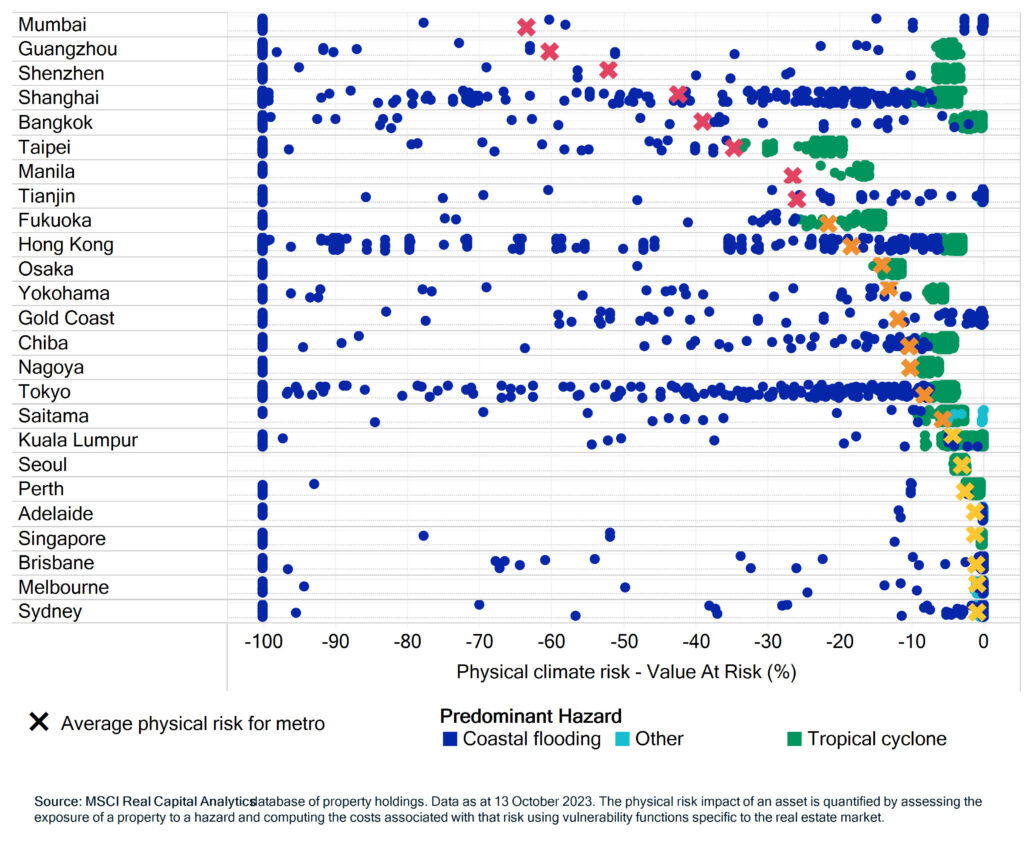
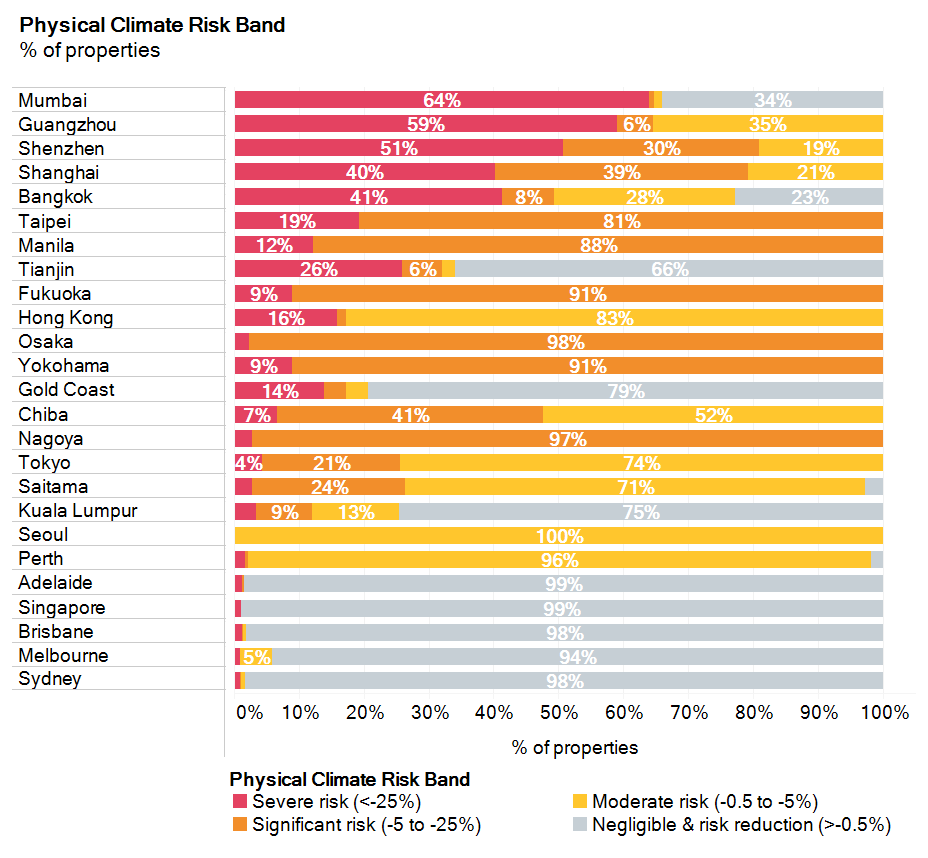
Applying climate analysis to MSCI’s Real Capital Analytics database of global property holdings, we can see a broad range of aggregated physical climate risks across real estate in selected Asia-Pacific cities. As we previously showed for cities worldwide, these risks were not equally distributed within each city.

Once again, location and topography were decisive factors behind the impact of physical climate change, reinforcing the idea that investors may wish to consider climate risk at the individual asset level, rather than relying solely on market-level data.

The charts below illustrate Average physical risk vs. risk distribution across major Asia-Pacific metros

Physical Climate Risk

Average for metro and asset-level

Physical Climate Risk Band

% of properties

Niel Harmse

Vice President
MSCI Research ×

Niel Harmse

Vice President
MSCI Research

Niel Harmse works on the real estate-solutions research team. He focuses on performance measurement, portfolio management and risk-related research for asset owners and investment managers. Prior to joining MSCI, Niel was an investment analyst at Old Mutual Property and a research analyst at Investment Property Databank. He holds a B.Com in economics and a B.Com, with honors, in econometrics from the University of Johannesburg.

According to the World Economic Forum, 80% of the buildings today will exist in 2050. The built environment is responsible for about 40% of global CO2 emissions. Retrofitting is the least capital-intensive way to make our existing buildings smarter and more efficient in order to reduce carbon emissions. It is also an effective and efficient way to drive financial outcomes capital and operational changes within the current parameters of a building’s design.

Companies around the world are stepping up on their efforts to decarbonise their business, and countries are setting national targets to reach net zero under the Paris Agreement. As APAC’s largest real asset manager powered by the New Economy and the third largest listed real estate investment manager globally, ESR Group Limited (“ESR” or “Group”) places top priority on its transition to become a net zero organisation.

Climate Emergency and the Era of Global Boiling

Recent climate events – extreme heatwaves and devastating floods – are occurring globally and this highlights the urgent need for concerted climate action. Instead of focusing on this urgency, some countries are shifting their focus to address energy security as a result of external headwinds such as
economic recession, supply chain disruptions, and geopolitical tensions. The disparity between the current climate crisis and inadequate actions has resulted in global greenhouse gas (“GHG”) emissions reaching an all-time high this year. This prompted the United Nations to warn that the era of global warming has ended, and the era of global boiling has arrived. To address the catastrophic impacts of climate change, ESR believes that immediate decarbonisation actions must be taken to transit to a net zero future.

Net Zero in the Real Estate Sector

The built environment is responsible for almost 40% of global energy related GHG emissions and the real estate sector could contribute to a positive impact. Achieving net zero depends on a myriad of factors such as the type of asset class, location, and condition of buildings, with a fit for purpose strategy. In developing a decarbonisation strategy, real estate owners and managers should consider their building portfolios, regulatory requirements, and the market availability of low-carbon technologies and solutions.

At a basic level, real estate companies should reduce their Scope 1 and 2 operational GHG emissions, which are normally associated with energy use from direct and indirect sources (e.g., on-site fuels and grid electricity). Specifically for developers and owners, GHG emissions across their value chain such as embodied carbon should also be considered. This includes tackling other forms of Scope 3 GHG emissions throughout the life cycle of a building (i.e., from design, construction, operation to demolition) and addressing tenants’ energy consumption within the portfolio.

After establishing the boundaries and sources of GHG emissions, companies should set realistic targets which are aligned to global standards such as SBTi , WorldGBC or RE100. However, companies must avoid setting underpromise or ambiguous net zero targets with misleading climate claims. Companies’ targets should be supported by robust performance data which are collected through the data management system to facilitate monitoring and reporting.

ESR’s Decarbonisation Approach

As part of its ESG 2030 Roadmap, ESR is on track to develop and announce its net zero commitment and strategy this year. This encompasses a carbon mitigation hierarchy approach which prioritises GHG emissions avoidance through low-carbon design and construction (i.e., minimise embodied carbon) and achieves energy efficiency through the asset enhancement initiatives and optimisation of operations (i.e., reduce operational carbon). These efforts will be complemented with the adoption of on-site renewable energy from sources such as solar or hydrogen to further reduce emissions. As of first half of 2023, close to 100 MW of rooftop solar power capacity has been installed across the Group’s global portfolio with approximately 39% of its assets being awarded with sustainability building certifications and ratings. Additional highlights include ESR leveraging on the rooftop space of its assets to provide renewable energy certificates for its customers. For more information, please refer to ESR’s ESG Report 2022.

Climate change has no boundaries and affects the current and future generations. The real estate sector could play a significant role in combating the climate change. However, fighting this uphill battle is a collective effort that requires everyone’s commitment, collaboration, and concerted actions. In accelerating a positive impact in the real estate sector, ESR will lead the way forward to a climate resilient future.

aprea icon logo

Tang Boon Kang

Group Head
Governance & Sustainability ESR Group

Cushman & Wakefield’s ESG Report covers our global impact during 2022, select highlights from 2023 and targets for the years to come as we work toward shaping a more sustainable, inclusive future for commercial real estate.

In this month’s ESG Buzz, we explore how DEI drives corporate performance and highlight necessary steps to achieve success in this area. 

Diversity, Equity, and Inclusion (DEI) initiatives are showing some progress in the Asia-Pacific region, but they still have a considerable way to go. At SS&C Intralinks, we recognise that DEI is no longer just a buzz term for corporate reporting. Instead, these initiatives are critical in driving long-term success across every industry.

The Power of Diversity in Corporate Performance

Diversity encompasses a wide range of dimensions beyond gender and ethnicity, such as age, sexual orientation, disability, and more. Embracing diversity across these dimensions brings fresh perspectives, enhances creativity, and fosters innovation.

It should also be noted that diversity drives marked improvements across every corporate reporting metric. The Gender Diversity & Dealmaking 2022 report by SS&C Intralinks revealed that:

  • Female CEOs complete more M&A deals
  • Diverse boards and female CEOs lead to better post-deal performance
  • Acquisitions by diverse boards exhibit greater risk aversion and better performance

Additionally, McKinsey research has found that companies with high levels of executive- level diversity were 62% more likely to outperform their competitors in profitability. Another study found that when women match men’s participation in the workforce, significantly more opportunities arise that could improve Asia-Pacific’s GDP by 12.5% – the equivalent of USD $4.5 trillion.

The Current State of DEI in APAC

Kantar analysis reveals that DEI initiatives are struggling in APAC, despite growing awareness of their importance among businesses and brands. The annual global study revealed DEI initiatives were struggling in APAC markets. Although Australia showed the second-largest growth in DEI progress, Japan has gone backwards, and India underperformed, showing we still have a long way to go.

Another study by Workday found that the lack of a strategic approach in DEI was most prevalent in APAC, with more than half (52%) of respondents indicating that their organisations did not have an approach – which is concerning when compared to Europe (39%) and North America (34%).

From a reporting perspective, we see that DEI disclosure is slowly becoming a mandatory requirement across many domains. For example, the Hong Kong Stock Exchange and Singapore Stock Exchange have recently updated board diversity disclosure requirements for listed companies.

In Singapore, the voluntary target for the 100 largest companies is for 25% of the board to be female by 2025 and 30% by 2030, while South Korea has also implemented mandatory diversity quotas in 2020, requiring at least one female on the board of public companies.

Leading the way in private markets, AirTree Ventures, Blackbird Ventures, along with other VCs in Australia, have recently pledged greater transparency in revealing investments in women-led businesses to address start-up funding gender imbalance and promote diversity for better outcomes.

Steps to Building DEI Success

Creating an inclusive environment where all employees feel valued and respected is key to unlocking the true potential of diversity. This can be achieved by encouraging open dialogue, establishing mentorship programs, and implementing unconscious bias training to foster inclusivity. Every company should, at the minimum, be pursuing the following:

Addressing Pay Equity: Strive for pay equity within your organisation by regularly conducting pay audits and eliminating any unjust wage gaps. Fair compensation enhances employee morale and bolsters the company’s reputation as a socially responsible entity.

Parental Leave Policies: Promote equal parental leave opportunities and support for working parents in company policies. Encourage shared caregiving responsibilities, while fostering a family-friendly and supportive work environment.

Promoting Equal Opportunities: Ensure equal access to growth opportunities and leadership roles for all employees, irrespective of their background. Implement clear career advancement frameworks and mentorship programs to support career progression.

Embedding DEI in Company Policies: Integrate DEI principles into your organisation’s governance structure and core values. Establish clear policies against discrimination, harassment, and bias, with stringent consequences for violations.

Measuring and Reporting Progress: Set measurable goals for DEI initiatives and track progress regularly. Transparently report on DEI metrics and outcomes to stakeholders, showcasing your commitment to accountability.

Embracing DEI practices leads to tangible benefits for businesses, employees, and society as a whole. By fostering a culture of inclusivity, we pave the way for innovation, increased productivity, and long-term success. So, take the leap, embrace change, and be at the forefront of the transformative power of inclusion. Let’s make a positive impact and shape a brighter, more inclusive future for all.

Sacha Madden

Sales Director
South APAC, Alternative Investments
SS&C Intralinks

As a specialist real estate investor, Cohen & Steers has long viewed executive compensation and stock ownership as a critical pillar of governance, underpinning longer-term alignment with investors and broader stakeholders of the listed REIT sector across Asia-Pacific.

Managed properly, executive compensation can enhance value creation and growth over the longer run, help retain and develop talent and encourage sustainable business practices. Managed sub-optimally, compensation may encourage short-term behaviour, poor capital allocation and strategy, loss of key talent and risk losing the firm’s social license to operate.

Compensation and equity alignment can be challenging to get right. The pandemic has shown for a number of listed REITs that remuneration structuring and key performance hurdles were not fit for purpose, resulting in a wholesale “shifting of the goal posts” thereafter. Schemes with longer-term performance hurdles focused on securityholder returns and sustainability, with a greater lean into longer-dated stock grants, generally fared better through the cycle. An emphasis on nearer-term performance targets with outsized cash components or short-dated stock grants were ultimately more impacted by cyclical factors that were (at least partly) out of management’s control. Similarly, schemes that lacked a meaningful performance objective and were linked predominantly to the passage of time have generally not fared well.

In our view, some of the more successful remuneration schemes have featured >50% weightings to longer-dated stock with a 5+ year vesting period. Implicit in these schemes is a requirement for Boards to be hands-on with management succession and retaining emerging talent. Some level of staff turnover is generally healthy, necessitating appropriate planning in the context of longer-dated stock schemes. We also encourage challenging stretch targets around a REIT’s Environmental, Social and Governance (ESG) objectives to the extent they are embedded within the firm’s broader objectives. In our view, the upfront disclosure of these targets and subsequent periodic disclosure of realised performance provides best practice transparency.

With the growing prevalence of externally managed REITs across the region, we also encourage the voluntary disclosure of key management remuneration and stock schemes, including clear disclosure of performance hurdles and achieved outcomes. While not necessarily required under local listing or regulatory requirements, we believe constructive stakeholder discussions lead to improved outcomes over the longer run.

Dane Garrood

Portfolio Manager – Asia-Pacific
Cohen & Steers

Colliers’ latest Impact Report provides an overview of their progress towards their Environment, Social and Governance (ESG) goals and performance in 2022.

The report is structured according to the three pillars of their ESG strategy, Elevate the Built Environment: the environment, inclusiveness, and health and wellbeing, which represent the key areas where they can drive the most impact for our people, clients, and communities.

Their reporting is prepared with reference to the Global Reporting Initiative’s GRI Standards and frameworks set by the Sustainability Accounting Standards Board (SASB) and the Taskforce on Climate-Related Financial Disclosures (TCFD).

Read the Report

GLP data centers are designed, built and operated in accordance with GLP’s ESG principles. In China, GLP is one of the largest independent data center operators with assets that will deliver over 1,400 MW of IT capacity. Our full-service data center platform is led by a best-in-class team of over 700 professionals with deep domain knowledge across IT, utilities and mobile communications companies. GLP has committed to ensuring that 100% of its new data center projects in China comply with GB-A/T3 1 standards and ODCC2 2 certification.

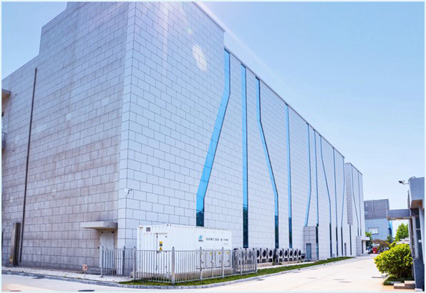
Case Study: GLP Beijing Yizhuang Data Center (“GLP Beijing Yizhuang DC”)

GLP Beijing Yizhuang DC is a tier 3 cloud data center with a total GFA of 18,230 sqm and 17.4 MW power capacity. It is located in greater Beijing which is one of the key data center hubs in China. Sustainability was factored in all stages of the asset lifecycle from design to operations and management.

GLP Beijing Yizhuang DC is designed with reflective roofs to reflect solar radiation, reducing the heat island effect and energy required to maintain overall building temperature. The data center is designed to utilize high voltage direct current (HVDC) power supply which is more energy efficient and cost effective than traditional alternating current (AC) power distribution. It also uses a chilled water cooling system which requires less energy than conventional air-cooled chillers.

All server rooms are installed with intelligent lighting systems which are configured to prevent energy wastage and the data center is equipped with sustainable lighting fixtures which are 100% mercury free. These initiatives earned GLP Beijing Yizhuang DC a 96 out of 100 score in its Energy Star evaluation by the U.S. Environmental Protection Agency (EPA). Water usage was reduced by approximately 27% through water-saving appliances and the upgrading of faucets and pipelines, and approximately 62% of the data center’s daily operation supplies are sustainably procured.

In addition to its advanced environmental design features, GLP also enhanced the sustainability of the data center’s day to day operations. GLP Beijing Yizhuang DC is equipped with GLP DC Base, a proprietary multi-data center smart operation and management system which utilizes centralized control model, digital twin, and artificial intelligence technologies to monitor and manage performance parameters such as temperature, humidity, water and air quality to optimize energy efficiency. Through these measures, GLP Beijing Yizhuang DC was able to save approximately 260 tonnes of carbon emissions in 2022.

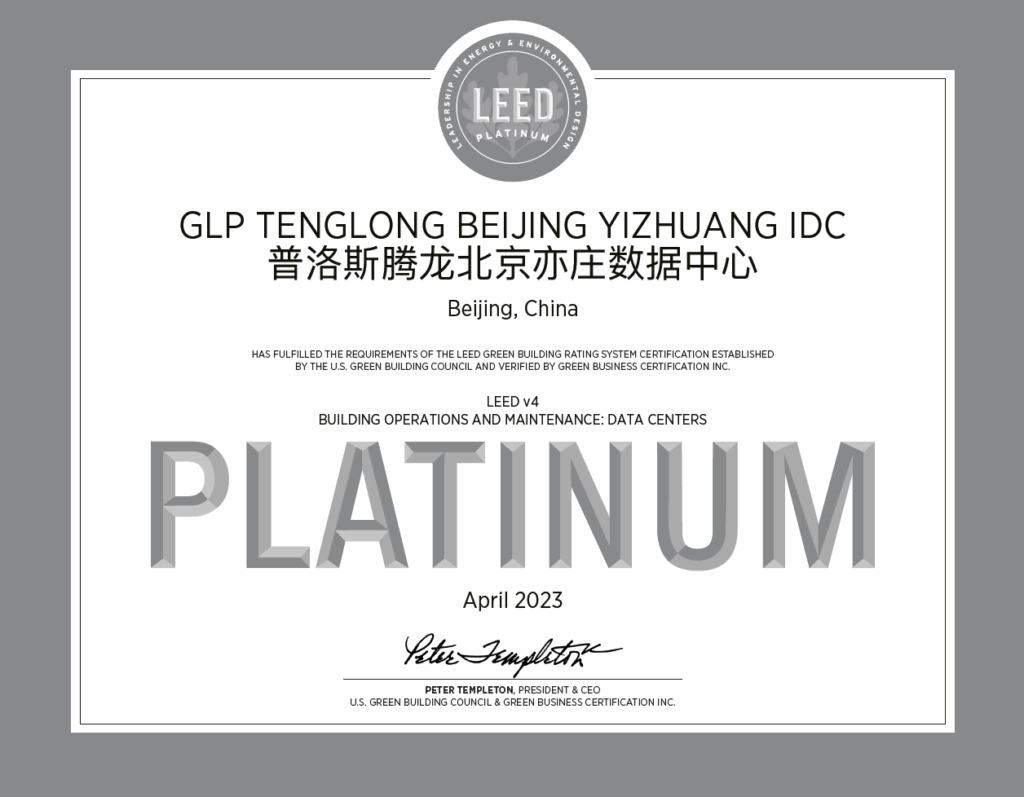
As recognition of its sustainable performance, GLP Beijing Yizhuang DC received Leadership in Energy and Environmental Design (LEED) v4 Platinum certification for building operations and maintenance. This is the highest level of certification by LEED, the most widely used green building rating system in the world, and GLP Beijing Yizhuang DC is one of the few data center infrastructure projects in China to achieve this level of certification.


1 GuoBiao (GB) standards are the highest classification of national standards with specifications issued by China for various products and services. A Tier 3 (T3) data center has multiple paths for power and cooling and systems in place to update and maintain it without taking it offline. 

2 Open Data Center Committee (ODCC) is formed by key data center industry players with an aim to create an open data center platfor in China and promote the development, acceleration and standardization of the industry.

The Hong Kong Trade Development Council (HKTDC) and Link Asset Management Limited (Link) released a survey study, “Hong Kong Green Capabilities in Real Estate Development and Property Management: RCEP Opportunities”, which highlights seven distinct advantages of Hong Kong in the field of green buildings.

The report also underscores green building challenges across the Regional Comprehensive Economic Partnership (RCEP) countries, with which Hong Kong can strengthen collaboration in four major areas to expand Hong Kong’s and regional green building capacities to create a greener and sustainable future: climate risk assessment and design consulting; green financing; construction and facility management digitalisation; and green material certification and sourcing.

Read the Full Article

The world is in transition. We are seeing the shift towards a low carbon economy. The transition is a response to climate change, technological innovation as well as demographic shifts. The transition to a low carbon economy requires collaboration across all sectors, from investors, regulators and customers.

At BlackRock, we believe that climate risk is an investment risk. By investing in properties that take into consideration financially material physical and transition risks, alongside other information, investors may create a more resilient and valuable portfolio. It supports responsible business practices and leads to risk-adjusted financial benefits in the long term.

Sustainable investing in real estate can be a powerful way to align positive environmental and social outcomes with financial goals. As investors, part of the decision-making process is to incorporate financially material environmental, social and governance considerations, alongside other information to enhance risk-adjusted returns.

Decarbonizing hard-to-abate sectors requires technological innovation. It requires the deployment of clean energy technologies and the decarbonization of heavy industries. Government policies and regulations also play a role in low carbon transition and help provide incentives to invest in clean technologies. It is a complex and challenging task.

Improving property design and operations is crucial to reducing carbon footprint as they become resource efficient and support healthier and livable communities. The use of renewable energy, energy-efficient design, better building materials and smart technologies are some of the ways that asset owners and managers can prioritize to add value to the property. Smart technologies can be used to monitor energy use, water consumption and other aspects of building operations. The use of renewable energy in real estate can be one of the best ways to reduce carbon footprint and reduce energy costs in the long run.

In addition to these strategies, asset owners can also focus on creating more sustainable communities. Building designs that connect to public transportation and cycling paths and incorporating amenities such as green spaces can promote a healthier lifestyle.

Overall, real estate has a significant role to play in sustainability, and by adopting sustainable practices and technologies, real estate owners can future-proof their assets by reducing their environmental impact, improving their communities, and creating a more sustainable future.

Wincel Kaufmann

Head of Sustainable Investing
APAC Alternatives
BlackRock ×

Wincel Kaufmann

Head of Sustainable Investing
APAC Alternatives
BlackRock