
Connect with us on
Office as a sector was doing well in India before the COVID-19 impact and ANAROCK is bullish on the same. Some occupiers may defer taking up new office space but from a USD perspective the Indian office market is very affordable and competitive at less than 1 USD per sq ft per month.
Large Occupiers may delay expansion plans and the Indian corporates may downsize space. But in the mid-long term there should be a recovery.
Retail: Retail has been badly affected and was the first sector to be hit; may take longer to recover. With the merchandise being locked and with changing trends/season even when the retailers open, they may have to sell at discount further impacting their cash flows. So they would need support from the developers on rent not only during lockdown but beyond and much more support from the government to bail it out.
Residential: 20,000 potential homebuyers who may have bought a house in the next 60 days were surveyed. There was mixed sentiment with the negative being on the unpredictability of keeping back their job or potential salary cut. The positive came from people who compared RE as an investment class to stocks and mutual funds that had taken a beating. It also came from tenants of housing societies that differentiated between the owners and tenants, thereby propelling this section to buy a house once things stabilize.
Favourable trends in the residential sector are:
For India there needs to be government intervention and stimulus. In any case we shall see the big getting bigger and lot of consolidation with the small players being bought out.
The panel was moderated by Mr. Shohbit Agarwal, Managing Director and CEO of Anarock Capital.
Panelists:
Mr. Anuj Puri (Anuj), Chairman, ANAROCK Property Consultants
Mr. Ankur Gupta(Ankur), Managing Partner | Head of India, Real Estate, Brookfield Asset Management
Mr. Keyur Shah(Keyur), CFO, HDFC Property Ventures
Mr. Arshdeep Sethi, Managing Director – Executive Board, RMZ Corp
Mr. Sanjay Dutt (Sanjay), Managing Director & CEO, Tata Realty and Infrastructure Ltd and Tata Housing Development Company
Mr. Venkat K Narayan(Venkat), Chief Executive Officer – Prestige Estates
Sanjay and Venkat, both agreed that there has not been much demand for rent reduction from office occupiers and that more than 70% have paid rent. Sanjay who has delivered 6 million square feet and 22 million is under construction, mentioned that there was a knee jerk reaction on force majeure and that the covenants of the lease agreement were not fully understood by the occupiers, when 100% functionality was ensured at the IT parks.
Venkat who runs 10 million square feet of office said that the rent free period for pre-committed leases is likely to increase due to labour shortage. He also agreed that there has not been a great demand for rent waiver or deferment.
Ankur has both SEZ and office space and finds no difference in tenant behavior in SEZ and non SEZ. As market opens the SEZ will have an upper hand being export focused and having the government support.
RMZ apart from offices and IT Parks has co-working business too. As per Arshdeep, the impact of COVID-19 will have a lasting effect on people’s behavior too. The open plan layout and densification will change. Co-working if dependent more on start-ups then will see the income evaporating vis-à-vis office/IT part tenants.
Traditional office will still find more flavor as it is more controlled environment than co-working. If co-working can look to de-densify, change the product or do long term enterprise solution then co-working space may continue to survive.
Keyur mentioned that all developers have to revisit their financing assumptions although interest rates are at a historic low. The availability and quantum of credit to the developers will undergo a change. Lenders may seek lower loan to values, so requirement for higher promoter’s equitymay become the norm. All industries are seeking capital and there could be rationing of capital to real estate too.
From investment perspective the exit for investors will be assumed from cash flows and refinancing may not be easily available.
For commercial segment occupier commitments will need to be in place before start of construction and there will not be much of speculative construction.
Venkat noted that like residential the consolidation will happen for single office assets too. But key will be the stage of construction, design and location. Like RERA acted as a trigger for consolidation in residential COVID-19 will act as a trigger for office space.
Ankur noted that sometimes buying an asset which is leased could be risky than the newly built because those assets may not be re-leasable. So if global economy is shrinking and India grows at nominal rate then will affect cap rates in the negative direction. And if interest rates continue to be lower then will have a positive impact on lowering the cap rates. So with cost of capital going up in India there will be an expansion in cap rates.
Sanjay said that forward purchase structures are on the rise for the commercial assets especially from the tier 2 developers. On yields since there are limited quality assets it is sliding around 7%-8% and will be for 12-24 months.
Ankur noted a typical REIT investor has other avenues to invest like sensex, equities etc. Total quantum of organized REIT in the world runs into several trillion dollars and for India growth will be slower but it is here to expand in the next 5-10 years to reach several billion dollars.
Anuj noted that REIT is a good way for retail investor to participate. The business fundamentals remain strong, talent is there in India, cost arbitrage is there and asset qualities are good and they are under rented in value terms, so lot of inherent growth is there.
Ankur noted on retail across countries that unlike office that has a business model separate to the place it operates. Space is core to retail. Before the pandemic hit the retailers world-wide were struggling underlying changes to business models – too many malls and brands so double whammy. World-wide we are not over retailed but under demolished. Pandemic will fast track the demise of the not so good centers. Retail has a social aspect so there will be a change in behavior.
Tenants not being able to pay rent and landlord stepping in was always there and is not typical to the pandemic.
Venkat noted that it is a difficult period for Indian retail and rents have been waived. They are working closely with the tenants on re-inventing the model as consumer behavior will change keeping in mind social distancing and hygiene.
Anuj noted that there is much more pain for the retailer than just the developer foregoing rent. He echoed that the footfalls may not come in even after the pandemic as consumers would be conscious and people will come in only for essentials. This is beyond the lockdown from the mall owners perspective, as the mall owner has taken a loan from the bank too as lease rental discount, so the tenants need to start paying too.
Venkat operating affordable housing to luxury housing in India and 50 million square feet under construction in residential and delivered 60 million square feet in the last five years. 70% has already been sold under construction. For the news launches, home is all the more imperative due to consumer wanting to upgrade due to hygiene of neighbourhood etc. So demand will be there. But marketing will be different with more as digital. Regarding the completion more labour will have to be deployed. Current labour at site is being looked after during lockdown. COVID-19 has all the more pushed people to make a decision with real estate turning out to be a better asset class.
Demand will move towards quality residential developers with consolidation. Sales will come back to normal in 1-2 quarters or so as each city is different. Prestige’s property management services unit employs 5% of people and was available to take care of essentials of their customers. This was appreciated and word of mouth will help sales.
Anuj echoed the sentiment of Sanjay and Venkat that during the lockdown as well the sales were there online. The consumer would want more space and privacy so demand is there. COVID-19 will be the last nail in the coffin for the weak developers and there will be lot of consolidation.

Sigrid Zialcita
CEO
APREA
Sigrid Zialcita
CEO
APREA
Sigrid is the Chief Executive Officer of Asia Pacific Real Assets Association (APREA). Based in Singapore, she is responsible for overseeing the strategic direction, initiatives and operations of the association across Asia Pacific. Under her leadership, APREA repositioned to an industry trade group focusing on real estate and infrastructure.
Sigrid joined APREA’s executive team in January 2019.
Prior to APREA, she served as Managing Director of Asia Pacific Research and Advisory Services of Cushman & Wakefield (C&W) from 2010 through 2018, where she was responsible for research, thought leadership, strategy formulation and client management. Before relocating to Singapore, she was based in Washington, D.C. and led C&W’s U.S. research group in the Mid-Atlantic region, overseeing all aspects of market research activities in the Washington, DC; Virginia; Suburban Maryland, Baltimore; and Philadelphia areas. Prior to joining C&W, Sigrid served as a Senior Economist for the National Association of Realtors (NAR). In that position, she developed NAR’s office, warehouse, retail, multi-family housing, and international research programs.
A recognized expert in global economic, public policy and real estate issues, Sigrid is a frequent speaker at industry events. Her commentary on commercial and residential real estate markets is also regularly featured in a wide array of global publications, including the Wall Street Journal, Financial Times, Bloomberg, New York Times and Reuters. Additionally, she has made several television appearances on financial networks and radio such as CNBC, Bloomberg, CNN, National Public Radio and Channel News Asia.
Sigrid holds a Master of Business Administration from Cornell University’s Johnson Graduate School of Management and a Master’s degree in Economics from Pennsylvania State University. She is a member of several civic groups including the Rotary Club of Raffles City in Singapore, where she has served in various leadership positions, and serves in the Executive Committee of the Crohn’s & Colitis Society of Singapore.

Shobhit Agarwal
MD & CEO
ANAROCK Capital Advisors
Shobhit Agarwal
MD & CEO
ANAROCK Capital Advisors
Mr. Shobhit Agarwal, MD & CEO of ANAROCK Capital Advisors, is a visionary entrepreneur with professional excellence and experience of over 20 years in real estate investments. In his past role, Shobhit led the Capital Market division of JLL India with aplomb. Having handled many marquee transactions, Shobhit has been instrumental in leveraging Indian real estate to the global capital market platform.
During his 17 years stint at JLL, he created a robust platform focussing on client delivery and positioned JLL as India’s market leader in Capital Markets. With equal intensity and expertise, Shobhit also oversaw JLL’s hospitality business and helped various large hospitality chains with Asset Monetisation and Fund Raising. His in-depth knowledge about the sector and deep-rooted relationship with developers and capital providers have resulted into multi-billion dollar deals.
At ANAROCK Capital, Shobhit will steer the strategic direction through the various investment verticals to ensure that ANAROCK’s core philosophy of technology enabled investor-centric decision-making continues to serve the best interest of it’s clients.
Education
Affiliations
Anuj Puri
Chairman and Founder
ANAROCK
Anuj Puri
Chairman and Founder
ANAROCK
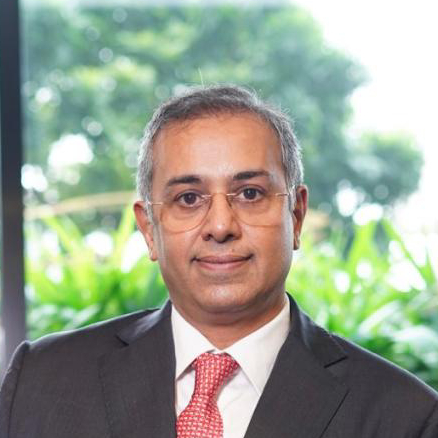
Sanjay Dutt
MD & CEO
Tata Housing Development Co. Ltd and Tata Realty & Infrastructure Ltd.
Sanjay Dutt
MD & CEO
Tata Housing Development Co. Ltd and Tata Realty & Infrastructure Ltd.
Mr. Sanjay Dutt is the MD & CEO of Tata Realty & Infrastructure Ltd and Tata Housing Development Company Ltd. Mr. Sanjay has over 28 years of experience in the Real Estate Development and Consulting space.Mr. Sanjay Dutt is the MD & CEO of Tata Realty & Infrastructure Ltd and Tata Housing Development Company Ltd. Mr. Sanjay has over 28 years of experience in the Real Estate Development and Consulting space.
He is managing 20 ongoing projects measuring across 13 cities in India, Sri Lanka & Maldives, which includes Commercial, Retail, Hospitality and Residential (Luxury/Premier, Affordable, Second Home & Mixed-Use Township). He is also involved in the management of the infrastructure projects, which includes 3 rope ways, 4 roadways & a Metro project in Pune.
In his previous role, he was the CEO India Operations & Private Funds with The CapitaLand, a multinational Alternative Asset Management Company focusing on real estate, infrastructure and private equity.
Sanjay spent 23 years with globally top 3 real estate consulting companies. He was MD South Asia at Cushman & Wakefield (2001-2008 and 2012-2016), also CEO Business with JLL (2008 – 2012) and was one of the founder member of CBRE, India (1996-2001).Sanjay holds a Post-Graduate in Marketing & HR from the International Management Institute. He is the Chairman South Asia - RICS, Joint Chairman of the FICCI - Real Estate Committee and Chairman APREA Asia-Advocacy Committee, Advisory Board NAREDCO and Co-Chairman of ASSOCHAM – Ease of Doing Business Council and a member of CoreNet Global.
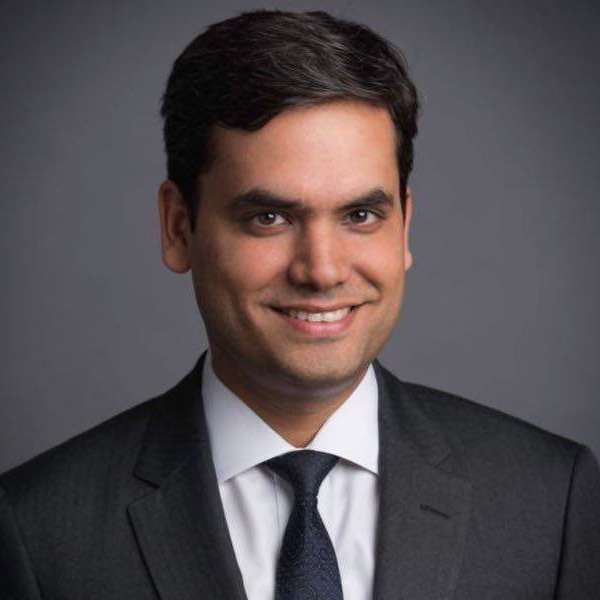
Ankur Gupta
Managing Partner, Head of India, Real Estate
Brookfield Asset Management
Ankur Gupta
Managing Partner, Head of India, Real Estate
Brookfield Asset Management
Ankur Gupta is Head of Asia Pacific and Middle East for Brookfield’s Real Estate Group. In this role, he is responsible for overseeing all real estate activities in the region, including investments, portfolio management and new fund formation. He also has direct oversight of the South Asia sub-region.
Prior to joining Brookfield in 2012, Mr. Gupta worked for a leading real estate development firm.
Mr. Gupta holds a Master of Business Administration degree from Columbia Business School and a Bachelor of Technology degree from the Indian Institute of Technology, Bombay.
Learn more about the ins and outs of the Asia-Pacific real assets scene
APREA strives to be the leading advocate for the real assets sector in Asia Pacific.
Asia Pacific Real Assets Association Limited
18 Robinson Road #15-01, Singapore 048547
Tel: +65 6955 7850
Email: enquiries@beta.aprea.asia
APREA Japan
Regus-Tokyo, Otemachi First Square
1-5-1 Otemachi, Chiyoda-ku, Tokyo 100-0004
Otemachi First Square East Tower 4F Japan
Membership, Publicity and Media Contact
Sigrid Zialcita, Chief Executive Officer
Email: sigrid.zialcita@beta.aprea.asia
© 2025 APREA All Rights Reserved. Privacy Policy